

Another bitter farewell
Pobeda once again joins a long list of clubs that have departed Macedonian football.

Let me start this article off with a bit of context about myself. I was born in a small town around the south of Macedonia called Prilep but I have spent most of my life in the country’s biggest city and capital Skopje. My dad, god rest his soul, was a huge Formula 1 fan whilst my mom would only ever really be interested in sports like figure scatting when they were on. This is to say that my household, including my younger brother, have no interest in football even dismissing the sport outright.
Despite all that, I somehow found myself attached to the sport even if I was no good at actually playing it. I was always surrounded by kids that loved the sport, that played it and that talked about so it felt natural that I followed suit. Then came the question of which team I should support. As a younger kid I previously had favored Manchester United, though that quickly faded once I’d realized how little I felt attached to them. If I wanted to find a team I’d actually cheer for, I had to look inwards into what Macedonian football had to offer.
Living in Skopje, for most it would make perfect sense to support the biggest team there, Vardar. It had the most trophies, it was still very much at the top of Macedonian football and it was achieving things most teams couldn’t at the time. Heck, the first ever football game I attended was Vardar’s opener in the Europa League against Zenit. But still I just didn’t feel that connection. The huge support that Vardar had on the west stand was brilliant to see but it just wasn’t enough.
Then I recalled an old conversation I had with one of my grandfathers. He once sat me down in the middle of Prilep’s bazaar and told me stories of this once big football club from my hometown that was then taken off the face of the earth after dubious events. It was a team that the entire town supported with a population of 45,000 filling up a stadium that could fit up to 15,000. It was revered across Macedonia and Yugoslavia for its exceptional home support and it even gave Prilep the moniker “the most footballing town in Macedonia”. That team was the original Pobeda, a club that dissolved in 2010 after UEFA and FIFA issued 10 year bans from continental and domestic competitions following a match fixing scandal.
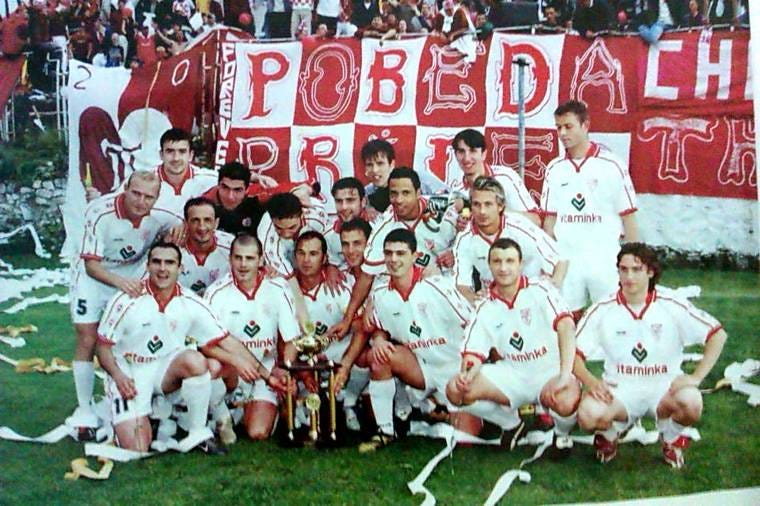
Immediately after they were forced to close their doors, a phoenix club was formed called Viktorija, which then changed its name to Pobeda Junior and then back to Pobeda in 2015. They fought their way up the ranks and finally reached the 1.MFL in 2016 after winning the 2.MFL title. This would be the team I would eventually decide to support. Every time I visited Prilep to see my extended family I would make sure to at least stop by the stadium just to see if anything was happening. Whether it was the renovations funded by the UEFA HatTrick program, or if I’d ever spot any of the players doing any training from the famous staircase that led up to the city hospital.
So why are we here then? If this was any other story the club would stabilize and compete in the 1.MFL for the foreseeable future. Instead this historic club would announce that it would quit competing in 2.MFL on February 10th 2026. This followed an entire winter where the club made no announcements to start training or play any friendlies whilst their decision means the club will be immediately relegated to the lowest tier of competition, which for clubs in Prilep means the fifth tier of the Macedonian football pyramid.
“Let’s start by discussing the state of the club. In April 2025 there was a change in the majority shareholder of our club. The new shareholder had already stated that they do not intend to run the club which meant that the only legitimate meeting between shareholders never saw the appointment of a managing director…
At this moment, with the club’s bank accounts frozen and the continuing troubling financial situation, we inform the public that FK Pobeda’s senior team will not be able to continue competing in the 2. Macedonian Football League.” read part of Pobeda’s statement.
This entire ordeal is a disaster, not just for football in Prilep but Macedonian football as a whole. How such a fate can befall a club of Pobeda’s stature for a second time should raise serious questions about the long term sustainability of the sport and the way that many in the country fund and operate their clubs. And yet in all likely hood most will just dismiss this case as just another club that dared to dream of greater things and fell flat on its face due to incompetent leadership, poor and/or unsubstantiated spending, farcical signings and misplaced belief.
For the sake of this article, we will go through a couple of points that contributed to the eventual downfall of Pobeda:
The endless stadium renovations that were several years overdue their deadline;
The presidents and owners who did not help in building a good foundation;
The 2022/23 season which saw Pobeda embarrassed on a national scale;
The dreamers who quit on the club just months into their ownership and essentially killed the club.
The stadium (and its never ending renovations)
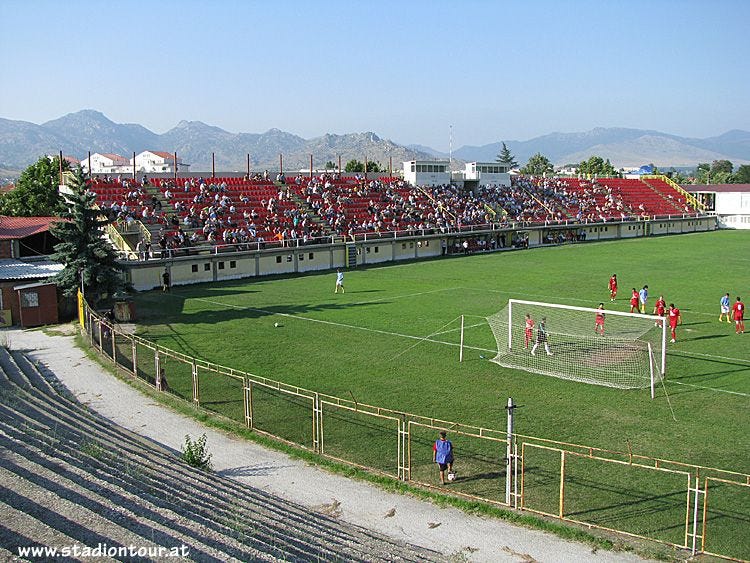
For many years one of Pobeda’s most defining features was its stadium and fans. Stadion Goce Delchev was a marvel within Yugoslavia and Macedonia, having a capacity of 15,000 seats and somehow managing to despite the town only having a population of 45,000. Prilep loved Pobeda and by extension loved football. However after the original club was dissolved following the match fixing scandal, the stadium found itself falling into disrepair. This isn’t even mentioning the decline in support that followed after the phoenix club had to start competing in the third tier.
The biggest hurdle for any renovations was the lack of money to make the necessary changes, so when UEFA came around and offered €1,000,000 to renovate the stadium under the HatTrick program, The FFM and the municipality of Prilep agreed to take on the project. The work was expected to start in 2016 with a deadline around 2019 for the 2019/20 season. Now this is the part where I remind everyone that this is Macedonia, and if there is a possibility to fuck up something spectacularly, people in positions of significance will take it without a care in the world.
The deal between FFM and the municipality was that the FFM would handle the pitch, the drainage and the new floodlights whilst the rest would be taken care of by the municipality. According to then mayor Ilija Jovanoski, they had reached out to two contractors who were supposed to complete work one after another. However he stated that the company that was responsible for the initial metalwork, Novogradba, only completed 7% of the work that they were meant to have done in 4 months.
Additionally there was big issues with the work the FFM had begun as they had agreed a deal with a Bulgarian contractor to install the floodlights and pitch. The problem then? They didn’t get the correct building permits, so the 4 gigantic floodlights that were already installed and towered over the entire town were officially classified as an illegal structure. As if that wasn’t enough the FFM’s then president Ilcho Gjorgjioski tried to give management of the floodlights over to the municipality, who unilaterally declined their offer.
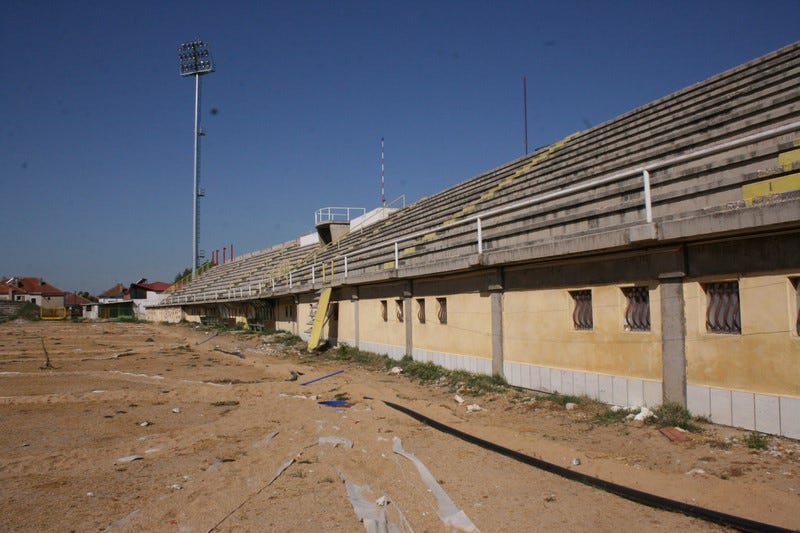
With construction on the stadium being so chaotic and the FFM not contributing any more, all work would be postponed temporarily in 2018 whilst the municipality sought alternative solutions for its construction. Work would begin once more in 2019 as the municipality sought out new contractors that could complete the needed work. The drainage was finally installed, a roof would be installed only on the north stand, the pitch would be laid out and the stands themselves would get a new coat of paint. Delays due to COVID-19 would mean the project couldn’t finish in a single year however in 2021 the stadium was finally functional and ready for Pobeda to use.
Whilst everyone was celebrating that the stadium finally finished its renovations, there were still many problems that plagued the stadium. For one, no seats were installed on any of the stands, only around the VIP section. This meant that if you were ever in need of sitting down, you’d have to enjoy the feeling of cold concrete unless you remembered to bring that old copy of Zenit with you as “padding”.
The second was that with only the north stand getting a roof, that meant that should the weather get worse the south stand would not be protected from the elements. It became a recurring trend for people on the south stand to leave the stadium or hug the wall at the top if they didn’t bring an umbrella with them, leading to poorer support from that side of the stadium.
Additionally because the floodlights were still technically under the FFM’s management, it fell onto them to maintain their functionality. Unfortunately the floodlights would be damaged several times as cables would be cut frequently making their use and maintenance almost impossible.
The effect these continuously delayed renovations had on Pobeda were huge. For one Pobeda had to spend the last 5 years looking to rent stadiums whilst they competed in the 1.MFL from 2016 to 2019 and then the 2.MFL from 2019 onwards. This meant having to pay rent for each home game, get only a portion of match revenue which was already lower than what they would’ve been used to as the games would be played in cities like Bitola, Shtip or Kochani. On top of all that they would also not only have to transport their own players and staff but also ball boys, stewards etc. meaning that what would’ve been an activity that could be done in at most 4-5 hours meant people had to commit to working an entire day which increased the price paid for those expenses too. For all intensive purposes, Pobeda became a traveling circus for 5 years and that left a huge strain on the clubs financial capabilities.
The chaos caused by Pobeda’s many presidents and owners
When it was formed in 2010, Pobeda’s phoenix club sought support from local companies that would bring it back to the level it deserved to be at. Many of them would eventually invest directly into the club as they bought up shares within the venture and invested not just as sponsors but as pillars of the club’s continued survival. Among these companies were Prilepska pivarnica, Comfy Angel, Zhito Prilep and Kabelnet from whom several presidents would run the club periodically.
In late 2015, Goce Ingilizov would be appointed as the club’s president replacing the then departing Goran Hadji-Risteski. Ingilizov is a doctor by trade but his time at the club would be more well known for his ties to Macedonian political party VMRO-DPMNE, whom he is a member of and previously sat on its municipal council. This fact alone would cause huge strain for Pobeda in its later years as VMRO-DPMNE’s downfall and left wing SDSM’s rise and victory in the 2017 local elections saw his position as club president become a point of contention.
Immediately the municipality and SDSM began to accuse Ingilizov of embezzling funds for the stadium through his mother’s ties to Novogradba, one of the original contractors for the stadium. Additionally they claimed that he became a 20% shareholder at Pobeda with a non-monetary contribution of €5,000 thanks in part due to his close ties with then mayor Marjan Risteski. With pressure mounting and his position potentially leading to Pobeda receiving no support from the municipality, Ingilizov resigned with the local companies tasked to steady the ship.
Try as they might though, the club found itself in debt that they simply weren’t able to find a way to finance without breaking the bank and soon the club would be relegated to the 2.MFL where said problem would be exasperated. Seeing the writing on the wall the shareholders decided to hand their shares to the municipality following the club’s relegation. The municipality then voted in favor of taking the share and in April 2021, 80% of those shares were handed to three individuals who were already at the club, Blagoja Geshoski, Kiril Ovezoski and Zoran Mircheski.
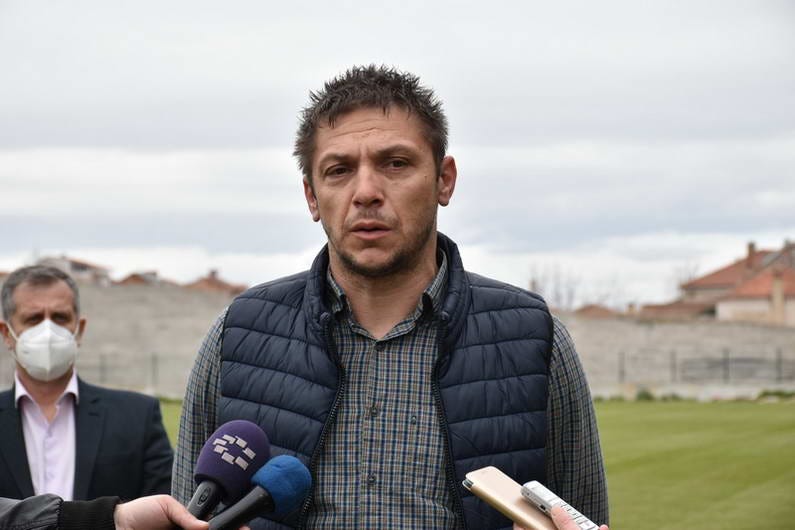
Of the three Geshoski was the most note worthy. Having come up through the academy at Pobeda, he was one of the club’s most tenured players achieving 97 appearances and 54 goals from 1999 to 2008 and was key part of the 2006/07 title winning campaign. He left just before the original club dissolved but would return to play for Pobeda in 2013 where he stayed until his retirement at the end of the 2020/21 season. Whilst Geshoski was certainly someone with knowledge of Pobeda, the thing he certainly didn’t have was business acumen as the then 40 year old was surely not well off enough to maintain the club without financial backing or good hands on deck.
This is why one of the club’s first decisions was also to appoint Emil Janeski as president of the club whilst Geshoski was given the role of sporting director. This also came with the formation of a 9 person board that was meant to include the mayor, the shareholders and president, members of the FFM who represented Prilep and fans of Pobeda. Having just barely survived in the 2020/21 season, Pobeda entered the new season with genuine enthusiasm. With the stadium somewhat finished, the club was able to host their games back in Prilep without resorting to playing at a different pitch. On top of that you had a very strong core of players from the town alongside many faces from around the top end of the 2.MFL.
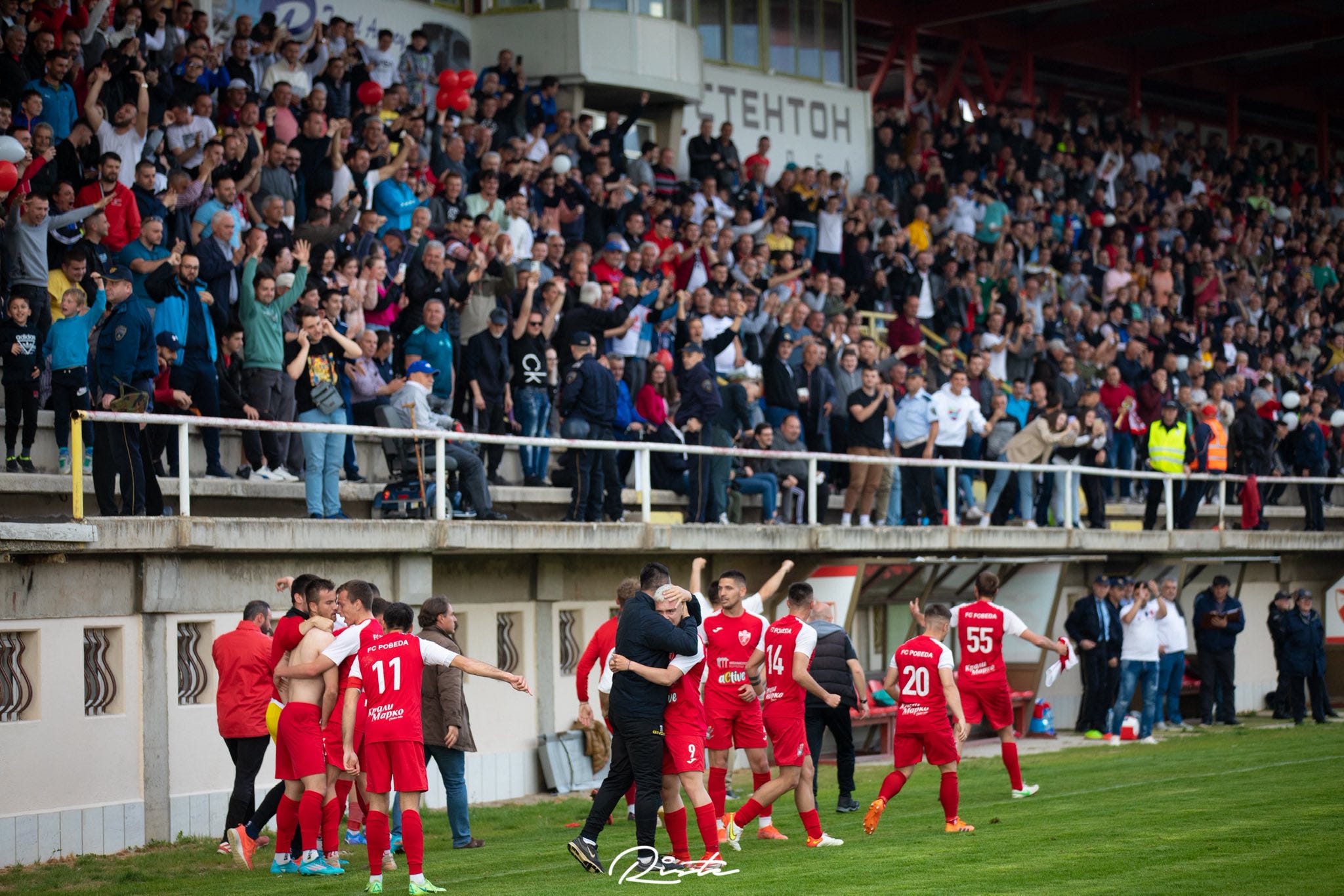
It was that good energy around the city as well as good management from both Darko Krstevski and Dimitar Kapinkovski which saw Pobeda achieve a top of the table finish in the 2021/22 season in the 2.MFL. New signing Bojan Spirkoski would finish the season with a whopping 20 goals which was not just the most in the eastern group but in the entire league. What’s more, Pobeda’s under-19s became champions of the Macedonian U19s Super League for the first time since 2004, giving them a spot to compete in the UEFA Youth League. Things couldn’t be going better for Pobeda.
The disastrous 2022/23 season
Whilst on the pitch the club was excelling, off the pitch there were some changes that impacted the club. For one, the local elections in 2021 meant that Prilep would return to VMRO-DPMNE after the many scandals that plagued SDSM. This would see Emil Janeski hand in his resignation due to said changes in local leadership with no new successor named afterwards. With his departure it seemed as if Geshoski took on the responsibilities as the main figurehead at Pobeda, but since no announcement or statement was ever made that much is left ambiguous. What was certain was that this season would be very difficult for Pobeda financially, as the club certainly did not possess the financial capabilities to compete properly in the 1.MFL.
Additionally, they would replace Dimitar Kapinkovski and put Boban Babunski in his place. Babunski is a Macedonian footballing legend having been one of a few Macedonians to ever receive call ups to the Yugoslav national team. That said his coaching career was lackluster to say the very least. He has only had 3 management roles at the time, one with Rabotnichki in the late 2000s then leading Macedonia’s under 21s before Blagoja Milevski came in and finally Vardar in 2018. With Babunski being out of coaching for almost 4 years, there were many questions if he was capable of taking on the task.
Regardless of all that the transfer window was about to kick off. With the club strapped for cash it felt like the logical step to focus on building a squad of players from Prilep and avoid going for international players. After all, the FFM to this day still has a rule in which clubs have to pay premiums up to thousands of euros per player. Instead however it seemed as if Pobeda was looking to do the exact opposite of that, with the club finding several foreign players to fill out their roster.
Whilst Amos Dadet and Ognen Djurkovic came from clubs in fellow ex-Yugoslav nations, two names stood out as questionable beyond all doubt. English forward Kal Malass and Ghanaian left back Eric Amo arrived to Prilep with little to no pedigree to back them. Amo came in from Ghanaian lower league side Feyenoord Youth (no relation to the Dutch club) and during his time with the club he only ever achieved 3 appearances with 105 minutes total. Malass meanwhile had a stint so disastrous which belongs as one of the worst transfers in the history of Macedonian football.

Despite the questionable arrivals, Pobeda was able to at least finish the first half season in 9th, just above then struggling Akademija Pandev and Skopje. New arrivals like Hamza Ramani and Igor Panoski along with players already at the club like Atdhe Mazari and Bojan Spirkoski and youth academy graduates Filip Todoroski and Andrej Arizankoski were doing just enough to push the club forward. However in the winter numerous financial issues would arise in Prilep. For starters many players went without salary, causing a mass exodus at the club during the winter break. Ramani went to Sileks, Mazari and Todoroski made their way to Rabotnichki, even Spirkoski and Mario Naumoski went south to Pelister. Even manager Boban Babunski departed for other opportunities.
A full rebuild would be required and yet the club had little to no money. With times being as desperate as they were, the club once again went to strange places for their recruitment. Many 2.MFL quality players would arrive to fill out the squad along with two young Serbian players who came in on loan. The most damning arrival of the whole winter and proof of the new board’s unpreparedness and unseriousness was Saleem Fawakhri. Fawakhri, then a 23 year old Israeli attacking midfielder, arrived from lower league side Maccabi Neve-Sha’anan who then played their football in the 4th tier of Israeli football. That’s right, Pobeda’s marque foreign arrival was an Israeli amateur player who’s biggest achievement is a combined 92 minutes across two games in the Israeli State Cup.
Following almost the entire team’s departure, a rebuild starring many what’s-their-faces of the Macedonian second tier and foreigners that had little to no capability at playing professional football, would you believe me if I told you that Pobeda went on to lose every single game of the second half-season? If you did, great, cause that’s exactly what happened. The 2022/23 season remains one of the worst seasons in 1.MFL history and were it not for Shkupi’s mockery of professional football this year, would see Pobeda’s 2022/23 rank as the worst 1.MFL campaign in recent history.
Steady decline and eventual nail in the coffin
Following the disaster of the 2022/23 season, Pobeda would spend its remaining years as a team battling for survival in the 2.MFL. With a budget smaller than Stuart Little’s living requirements and players who would cycle in and out quicker than Mark Cavendish at the Tour de France, there was little hope left that things would turn for the better for Pobeda. Its lowest ebb during this period was having to play for survival in the 2023/24 2.MFL relegation playoffs against 3.MFL North champions Kumanovo. Through a heroic effort from the Pobeda defense and goals from David Debreshlioski and Nikolche Sharkoski, they would survive the battle in Gjorche Petrov and live to fight another day.
The bad financial state didn’t just have an effect on the senior side, as soon the youth teams would be left dried out due to many prospects getting immediate promotions to the first team. Though that did lead to many good players being discovered like Leonid Kofilovski, Bojan Ivcheski and Davor Bogevski, many of them would quickly leave once more stable clubs came calling. It seemed like as the seasons ticked on the club’s relegation would become more certain due to the reoccurring phenomenon of Pobeda finding youth players that can keep it in the 2.MFL, only for said players to leave shortly after.
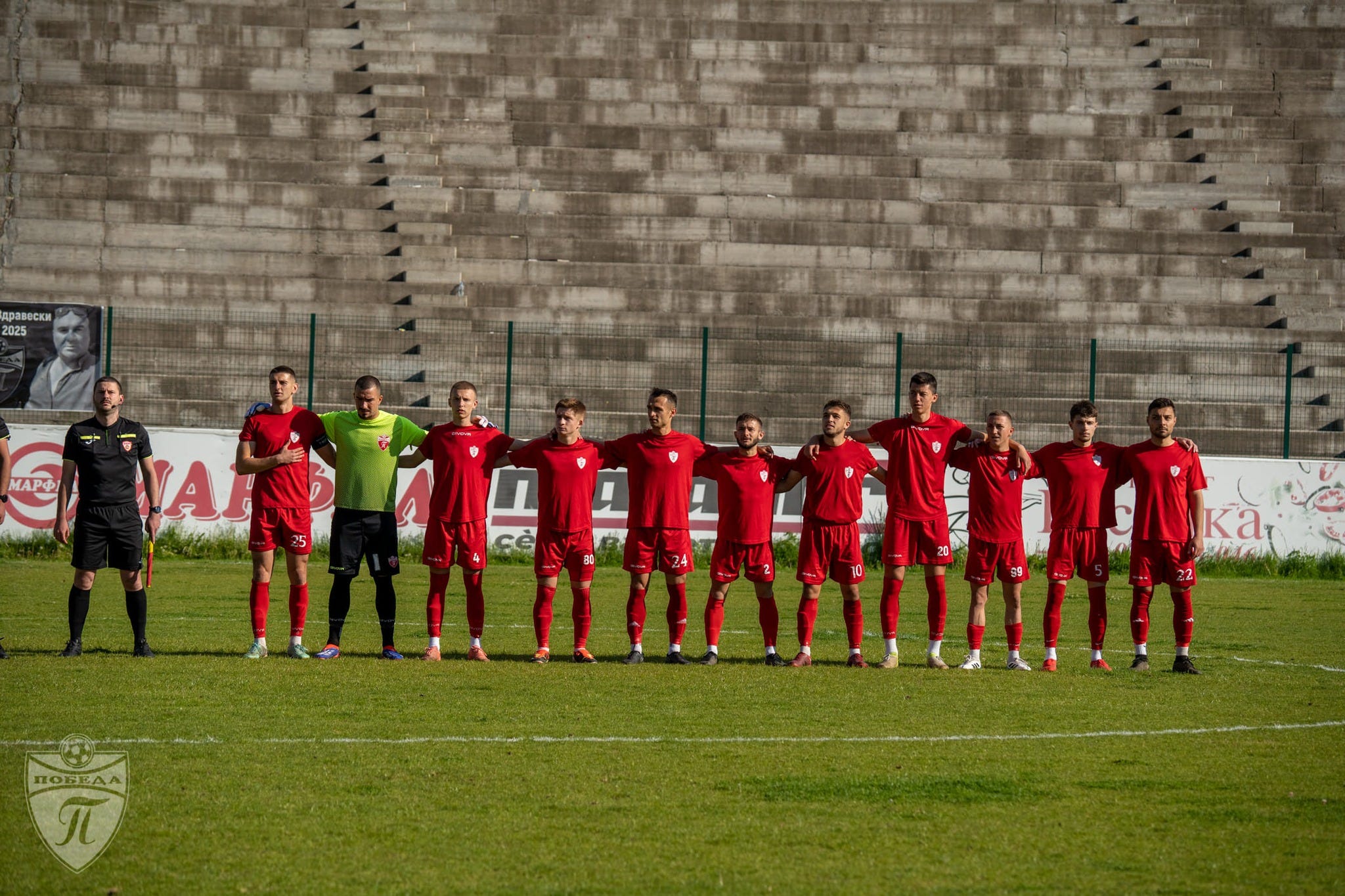
However a glimmer of hope finally befell Pobeda, as new owners were set to arrive in the spring of 2025. Headed by Macedonian-American businessman Aleksandar Mickovski along with his sister Jana Mickovska-Poposka and her husband and coach Sashko Poposki, the new ownership sought to bring Pobeda back to the top with promises of trophies ‘within 3 to 5 years’. All of it sounded perfect to many in Prilep, maybe even too good to be true. And unfortunately, it indeed turned out to be exactly that. Just as quickly as a new board of directors came in did the new ownership immediately declare they wanted to sell. This once again led to instability at the club, however this time the club’s very existence was in question rather than any position on the table.
Shortly after the announcement that the club would be left to its own devices by the new owners, the municipality of Prilep agreed to give the club a total of 1,000,000 denari in relief. Whilst the club was left without a captain, the club’s then secretary Filip Ilioski stood in as the club’s temporary managing director whilst a solution was being looked into. He alongside another board member Vladimir Mircheski stated in a press conference that the situation for Pobeda was so dire that if the money that the municipality promised did not arrive the club would simply have to quit the 2.MFL.
After competing in the first half of the season, Pobeda found itself in 12th after three wins, two draws and ten losses. It sat comfortably in the relegation zone with the 2.MFL set to shrink from 16 teams to 14 and a divine miracle would’ve been needed to get it out of the relegation fight. However as the days and weeks of the winter break passed, no news came of what Pobeda would do. No new signings, no mid season training and no friendlies either. Just silence on the part of the club. Fans would begin to gather in front of the city center and in front of the municipality, hoping that either they or someone else would save the club. Even then attendance was middling as many began to lose hope and eventually the worst was announced; Pobeda Prilep was quitting the 2.MFL.
The money the municipality promised several months ago before the local elections in 2025 never arrived, per Pobeda’s final statement. The municipality meanwhile released their own statement, claiming that Pobeda’s debts to UJP, Macedonia’s administration for public revenues were worth around 7,000,000 denari. They also accused the club’s owners of using Pobeda’s finances for the purposes of gambling and other fraudulent expenses. Even despite everything, there was still one final push for Pobeda to compete until the end of the 2.MFL season.
The club’s youth players were brought in to train with the hopes that they would be able to play out the rest of the season, as at the time the club did not officially send in a notice that it would quit the league. The club’s head of youth would’ve stepped in as the coach whilst any remaining players were welcomed to see the season through. Unfortunately even that attempt was unsuccessful per a statement from the Majmuni and thus finally ended any hope of Pobeda’s survival.
“Even after all our attempts for our icon not to fade, our efforts were unsuccessful… Even after we managed to build a team that could take us as far as the [relegation] playoffs, we were stopped by some ‘higher power.’” read part of the Majmuni’s statement.
“…There must be accountability! Publicly who, how and where they caused this damage!…”
Where do we go from here?
I’ll start this segment by simply talking about the feelings that I’m currently feeling. To be a football fan without the club you cherish most is a hollow experience. I’ve had friends joke about their clubs doing poorly (looking at you my good friend from Dalmatia), but this feeling of not having a club to even talk or complain about on the weekends takes a toll on the soul.
Sure, I can watch the Premier League or the Champions League or I can watch any other sports to get my fill of entertainment, but I’d always turn back to watch Pobeda because I deeply loved it so much. Yes, sometimes the results were so mind numbingly terrible that I felt like doing literally anything else but watching Pobeda, but I still came back week after week hoping that the next game would be the beginning of its comeback.
Now that’s gone. Not even just for a few months when someone will probably create another phoenix club, but for the foreseeable future. If a phoenix club were to be formed it would have to climb several tiers before it even got back to the level it once was at. Even then you don’t know if the same faults will befall this new club and all that hope of a new beginning gets replaced with the feeling that everything you just experience over the last 16 years will repeat again in a vicious cycle that torments us all.
At this point we’d turn to many of the culprits for this disaster, but there are so many to name you sometimes can’t even point to exactly who did the most damage. You had the last ownership who sank the club and left without as much as trying, along with the previous ownerships before that who either through political nonsense or complete incompetence led the club astray. Then there are the external causes like the FFM and their inept operating of the stadium reconstruction which cost Pobeda and Prilep a home for the city’s favorite sport. And let’s not forget the municipality who over several mayorships lied about where the club would play, lied about the money they promised they would give the club, and especially did little to nothing to save it at its most perilous. Their own attempts to blame bad actors in Pobeda should not be enough to cleanse them of their own guilt in what was their reckless abandon of a club the community held dear to their heart.
And now what? Pobeda is dead in the ground with the only teams it consist of now being their youth teams which will certainly fold either now or after the end of the season. In its heyday Pobeda was a certain constant for many in Prilep. You’d finish your workweek and then in the weekend you either sat down at home or you made the walk to the stadium and watched the city’s jewel play against some of the best in Macedonia. Even when those days were over, the club was still a bedrock of the town, though tainted by the mistakes of the past.
Despite the lies, the corruption and everything you can imagine that plagued this club until its last breath, for me and for many more out there, there is nobody like Pobeda Prilep.